
You Just Moved In. Rekey the Locks or Replace Them?
The safe answer is usually the one people do not think of first.
When a house changes hands in Delaware, the visible lock on the door is only part of the story. Over the years many different people may have been given a key: real estate agents showing the property, contractors who did repairs or renovations, cleaners, lawn crews, neighbors who borrowed a key, previous tenants, and family members of the former owner. Sellers often make a few extra copies for convenience and may not collect every one before they move. That means you could be living with a dozen keys out in the world even if the door only takes one key at a time. Who has those keys matters more for your day‑to‑day security than how long the lock has been on the door. A newer lock that many people can access is a bigger risk than an older lock that only a single trusted person has a key to.
Rekeying is a straightforward way to regain control without replacing the whole lock. Physically, a locksmith removes the cylinder or the plug from the lock and changes the tiny pins and springs inside. Those pins are matched to the cuts on a specific key; when we replace them and set them to a new key pattern, the old keys no longer line up and will not turn the lock. We cut one or more new keys to fit the new pin configuration and test the cylinder to make sure it operates smoothly. For many homeowners this is enough to ensure that former keys no longer open the door.
Rekeying addresses access control, not every lock problem. It prevents anyone with an old key from entering, and it lets you consolidate several locks onto a single new key if you choose. Rekeying does not repair a lock that is physically broken, nor does it change hardware problems such as a misaligned door, a worn latch, or a damaged strike plate. It also does not change the basic security features of the lock type you have; if you want a heavier deadbolt, a high‑security cylinder, or electronic access, those require replacing the lock or adding components. If a lock is corroded, seized, or has been tampered with, replacement is usually the proper choice rather than rekeying.
When you move in, thinking about who might still have keys helps decide the next step. Rekeying is often the practical choice to quickly cut off access from unknown copies. If you have concerns about the physical condition of the locks or want a higher level of security, consider replacing the hardware or upgrading to a different lock type so the doors match your expectations for safety and convenience.
Some locks are worth rekeying, but others need replacement. Replace a lock when the cylinder or mechanism is visibly worn, when the lock has been forced or shows signs of attempted entry, or when it has seized and will not operate smoothly even with lubrication. Locks that are mismatched across doors can create practical problems and security gaps; swapping an old, lightweight latch on an exterior door for a heavier-duty lock will give a consistent level of security and make keying and maintenance simpler. A lock that is too light for the door it sits on - for example, a thin tubular latch on a solid wood or metal entry door - will not hold up to everyday use or a determined attack and should be replaced with hardware rated for that door type.
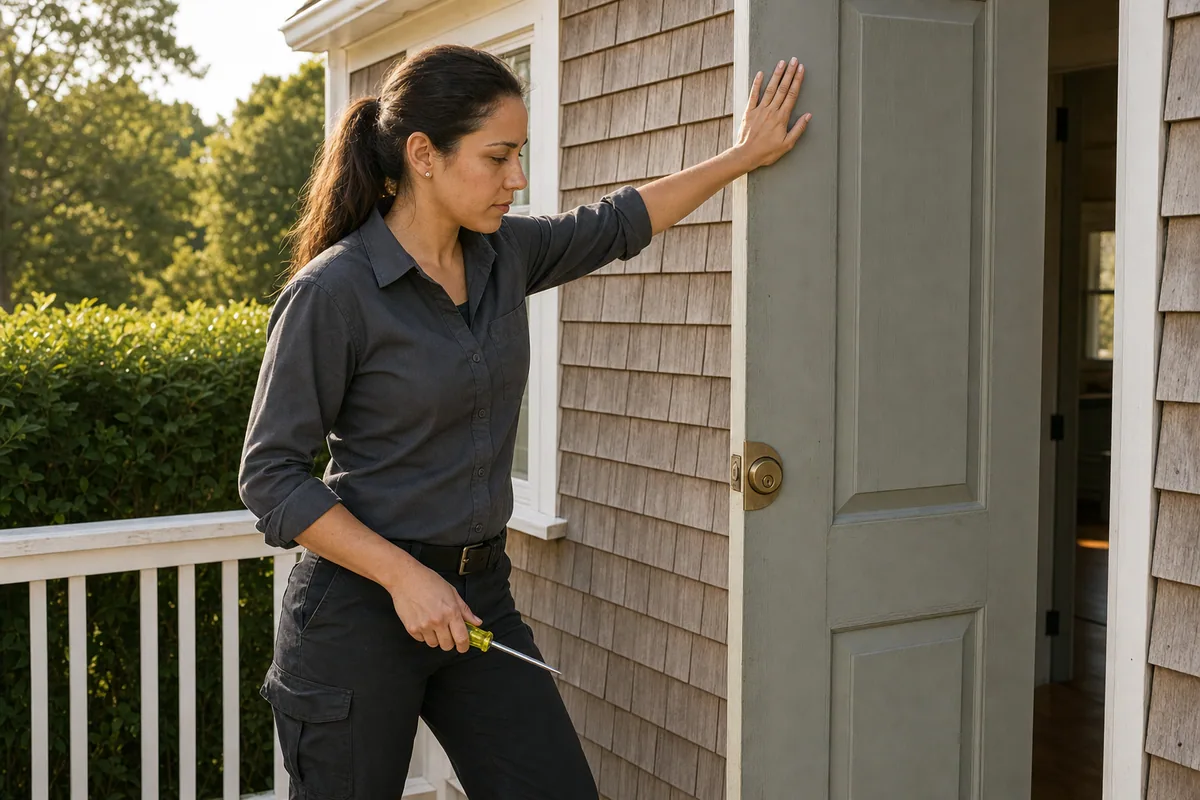
You can do a few quick checks from the doorstep to help decide which route to take. Insert the key and note whether it slides in smoothly or drags partway; a key that catches or requires wiggling usually points to worn or damaged pins inside the cylinder. Turn the key and watch the bolt or latch; it should extend fully and retract fully without binding. If the deadbolt does not throw all the way or the latch does not catch the strike plate cleanly, the mechanism or the strike may be worn or misaligned. Lift the door slightly as you try to lock or latch it; if the bolt only engages when you lift the door, the alignment is off or the frame has shifted, and a heavier-duty lock or reinstallation may be necessary. Also check whether the thumbturn, knob, or lever feels loose, whether the lock makes grinding noises, or whether the key wiggles significantly when in the cylinder. Any of these signs can indicate parts that are near the end of their service life and are better replaced.
Before you call for locksmith service, gather a few details that make the visit more efficient. Have the keys for the door available and note which doors you want inspected, and whether they are exterior or interior, wood, metal, or composite. Take clear photos of the existing lock from outside and inside, including the strike plate and the edge of the door, and note any visible damage from forcing or weather. Measure or note the door thickness and whether the lock is a single-cylinder deadbolt, a keyed entry knob, a mortise lock, or a smart or electronic lock. Tell us if you want matching hardware across multiple doors or a specific finish. When you call (302) 271-0155 we will come to your Georgetown or other Kent or Sussex County address in our van and discuss the options based on what you observed and photographed.
The services this article is about.
Every one of them is done at your address, anywhere in Kent and Sussex County.
The towns most of these calls come from.
More from Lock and Key.
Locked Out of the Car at a Delaware Beach
Sand, a spare in the glovebox, and a parking lot a long way from anywhere.
Read it → 02What Car Key Programming Actually Means
Cutting the metal is the easy half. The other half is a conversation with the car.
Read it → 03Door Hardware That Survives Salt Air
Coastal Sussex County is hard on door hardware. Here is what actually lasts.
Read it → 04Master Keying a Rental Property Without Losing Track
One key for you, one key per tenant, and a plan for the day someone does not give it back.
Read it →Rather just ask someone?
We answer across all fifty towns in Kent & Sussex County, Delaware.