
Door Hardware That Survives Salt Air
Coastal Sussex County is hard on door hardware. Here is what actually lasts.
Salt air carries more than the smell of the ocean. Microscopic salt crystals and airborne sand settle on every exposed metal surface of a door and its hardware. At first a homeowner will notice a dull look to knobs and levers where the original finish used to be smooth and even. Small, dark pinpricks appear in the finish and spread into shallow pits. The same process affects pull handles, deadbolt faces, and kick plates. These pits trap moisture and grit so the metal keeps corroding even on a dry day.
Inside the lock cylinder the effects are less visible until they start to show up in operation. Turning the key may feel stiff or gritty, or the key may catch at the end of a full rotation. You might need to jiggle the key or try twice to retract a deadbolt. The lock will often make a faint scraping or grinding sound as internal parts rub over residue left behind by salt and sand. If a lock feels like this repeatedly, those initial symptoms are the lock telling you that corrosion has already begun on pins and springs inside the cylinder.
Latches and strike plates are vulnerable in the same way. A latch that used to slide smoothly can start to stick or fail to fully engage, especially in humid weather. Homeowners often notice the door needing an extra push to close, or the bolt not lining up with the strike plate. Screws that hold strike plates and hinges can rust where the threads meet the frame. Over time those screws can seize so firmly that they break or strip when you try to back them out. You may also see discolored streaks running down the door or frame where rusted components have corroded and washed away with rain.
Frames and adjacent trim show their own signs before a lock gives out completely. Paint or sealant near hardware can bubble or flake where trapped corrosion grows beneath it. Stiff or noisy hinges are an early warning; a hinge that once turned quietly may now squeak and resist movement. Small white crystals or brown stains around weatherstripping and the base of the lock indicate salt buildup and trapped moisture. Noticing these changes and acting before the mechanism locks up avoids the sudden hassle of a failed lock, and helps preserve the appearance of your entryway.
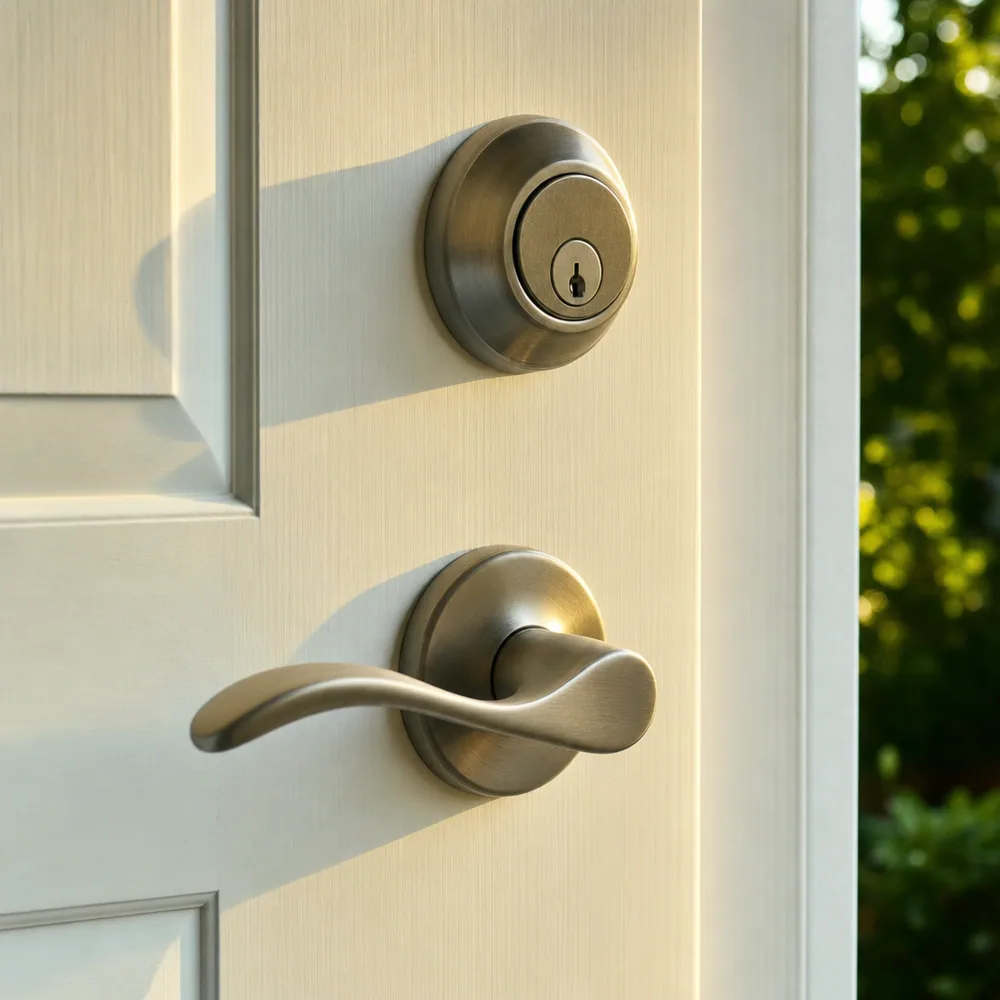
Coastal air speeds up corrosion because salt crystals attract and hold moisture on metal surfaces. For that reason, pick hardware whose base metal resists rusting. Solid stainless steel and solid brass hold up better than plated metals because the protective layer is integral to the piece rather than a thin finish that can wear through. Look for finishes described as marine-grade or corrosion-resistant and for protective coatings such as powder coat or ceramic-based finishes where exposed metal is a concern. Satin or polished finishes hide surface marks differently, but the important factor is how the metal underneath will react to salt and moisture over time.
The grade and construction of the lock body matter, but the strike plate and the screws that anchor it are equally important. A high-quality deadbolt or handle set will fail faster if it is mounted on a strike plate that flexes or screws that strip out of the frame. Reinforced strikes and longer fasteners that reach into the solid framing behind the jamb provide far better resistance to lateral force and the gradual loosening that comes from repeated use. Stainless steel screws resist rust and keep threads intact; consider screws that are at least three inches long where the structure allows, so the fastener takes load against framing instead of thin jamb material.
Pay attention to exposed screws, escutcheons, and weather seals. Plated screws and thin escutcheons can pit and flake, exposing the underlying metal to further corrosion. Trim pieces stamped from thin metal often lose their protective finish first, so choose hardware with thicker, solid components for areas that get the most weather. Weatherstripping and door sweeps stop salt-laden spray from reaching the edge of the lock and help keep moisture off the strike area. On wood doors, keep paint and sealers in good condition where hardware meets the leaf; this reduces the amount of standing salt and moisture that sit against metal parts.
A few simple seasonal tasks dramatically extend service life. Rinse visible salt deposits off with fresh water and a soft cloth; do not use bleach or harsh chemicals that strip protective coatings. Dry the hardware after rinsing. Lubricate keyways and moving parts with a dry lubricant such as graphite or a PTFE-based spray, and avoid heavy oils that attract grit. Check screws and trim annually and tighten or replace any that show signs of pitting. Regular attention is less expensive and more effective than waiting for visible failure, and it keeps doors operating safely through the harsher months. If you want advice for a specific door or hardware setup, we can inspect and recommend corrosion-resistant options that suit your entry.
The services this article is about.
Every one of them is done at your address, anywhere in Kent and Sussex County.
The towns most of these calls come from.
More from Lock and Key.
You Just Moved In. Rekey the Locks or Replace Them?
The safe answer is usually the one people do not think of first.
Read it → 02Locked Out of the Car at a Delaware Beach
Sand, a spare in the glovebox, and a parking lot a long way from anywhere.
Read it → 03What Car Key Programming Actually Means
Cutting the metal is the easy half. The other half is a conversation with the car.
Read it → 04Master Keying a Rental Property Without Losing Track
One key for you, one key per tenant, and a plan for the day someone does not give it back.
Read it →Rather just ask someone?
We answer across all fifty towns in Kent & Sussex County, Delaware.